Hedge Trimming in Poplar
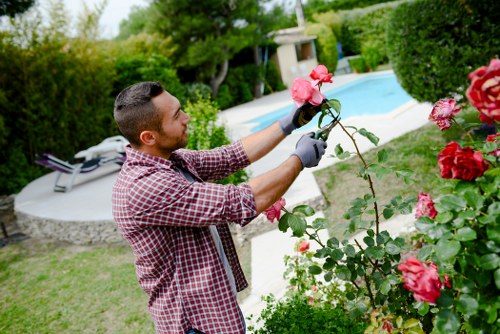
Hedge trimming in Poplar means keeping boundaries, screening and ornamental planting neat, even and under control, with work shaped to the garden rather than forcing the garden to fit a rigid cut. We focus on the practical side of the task: reducing overgrowth, refining the line of a hedge, and helping plants keep a dense, tidy form. For homeowners, landlords and property managers, that can make outdoor space easier to use, clearer to maintain and more presentable from the street.
Our hedge trimming service covers a range of common garden situations, from fast-growing hedges that need regular attention to mature shrubs that benefit from a careful, less frequent reshape. We can work on mixed lengths, corner sections, privacy hedges and formal lines, with attention to clean edges, consistent height and sensible removal of cuttings. If the hedge has become uneven, top-heavy or difficult to manage, the aim is to restore definition without taking away more growth than the plant can comfortably spare.
If you need hedge trimming in Poplar, use the pages below to find more detail on our related garden services and to request a quotation when you are ready. You can keep the enquiry simple and focus on the hedge itself, its access and the result you want.
Regular hedge maintenance and seasonal shaping
Regular hedge maintenance is usually the most straightforward way to keep a boundary hedge looking even through the year. Rather than waiting until it leans out over paths or starts shading too much of the garden, a planned trim can maintain width, height and a firm outline. That is useful for hedges used for privacy, as well as those that frame a front garden or separate planting areas. The cut can be lighter and more controlled when growth is still manageable, which often gives a better finish than a heavy correction later on.
Seasonal shaping is also important because different hedges respond differently to cutting. Some benefit from a crisp, formal line; others look better when the trim respects a softer, more natural shape. A thoughtful approach keeps the hedge healthy-looking and avoids the blunt, ragged effect that can happen when tools are rushed or cuts are made without a clear line in mind. Garden maintenance can be a useful companion service when a hedge is part of a wider routine that also includes borders, weeding and general tidying.
Formal lines, screening and boundary hedges

Some hedges need more than a quick tidy. Formal hedges, front boundary lines and planting used for screening all depend on accuracy, because a small mistake can be visible for months. In these cases, the work is less about simply shortening growth and more about preserving the intended shape. The top, sides and corners should relate to each other, and the finished hedge should look purposeful rather than patched together. Where a hedge runs beside a drive, entrance or walkway, the cut should also keep clear space for movement.
Hedges used as screens often need careful attention to the lower sections, not just the top. If upper growth is trimmed too aggressively while the base is neglected, the hedge can lose its density and leave gaps near ground level. A measured trim can help maintain coverage across the full height of the plant. For gardeners comparing related options, garden clearance may be relevant if the hedge area is surrounded by unwanted growth, cuttings or overrun borders that need removing at the same time.
When hedges sit close to fences, walls or neighbouring planting, there may be practical limits on how far they can be reduced in a single visit. The sensible approach is to work with the hedge’s structure and avoid exposing bare sections that take a long time to recover. That is one reason it helps to review the hedge line carefully before cutting begins, especially if the hedge has not been managed regularly.
Access, cuttings and preparation
Good hedge trimming depends on safe access and enough room to move along the full length of the hedge. Narrow side returns, uneven paving and tight corners can change how the work is planned, so it helps to know where tools can be positioned and where cut material can be gathered. If there are gates, sheds, ornaments or delicate planting near the hedge, they may need to be protected or moved so the cut can be completed cleanly. The aim is to make the process orderly, not disruptive.
We also consider what happens to the cuttings. Some hedges produce a surprising volume of material, even when the trim looks modest from the outside. Collected growth may be bagged or taken away as part of the job, depending on what has been agreed. If you are comparing services, services overview gives a broader picture of the kinds of outdoor work available alongside hedge trimming, while pricing and quotes is helpful when you want to understand how quotations are prepared.
For a straightforward enquiry, it is usually enough to note the hedge type, approximate length, whether you want a light tidy or a more noticeable reduction, and whether waste removal is required. Clear information helps the quotation reflect the actual work rather than a guess. Short notes and a few clear photographs can be enough for many standard hedges, especially where the shape and access are easy to see.
Hedge reduction and corrective cutting
When a hedge has been left too long between cuts, a reduction may be needed rather than a simple trim. That can involve taking back overextended sides, levelling an uneven top, or easing the hedge back to a more manageable depth. Corrective cutting needs care, because a sudden, severe reduction can leave gaps or expose woody sections that do not fill out quickly. The best result usually comes from balancing appearance, plant health and what the hedge can realistically support.
Not every hedge should be reduced in the same way. Evergreen hedges, deciduous hedges and mixed shrub lines can all react differently, and older growth may have a thicker framework than younger planting. A cautious approach can be preferable where the hedge is already sparse or uneven. Where surrounding greenery is also overgrown, landscape gardening may be relevant for customers who want the hedge brought into line with other planted areas rather than trimmed in isolation.
It can also be useful to think about what outcome matters most: a strict height limit, a neater street-facing line, more light into the garden, or simply a hedge that is easier to maintain next time. A good reduction plan should reflect that priority. In some cases, the finish may be deliberately conservative so the hedge has time to recover and come back denser before the next full cut.
Hedge trimming alongside wider garden care
Hedge trimming often sits alongside other garden work, especially where the hedge borders lawns, patios or planted beds. A tidy hedge looks better when the rest of the surrounding space is kept in reasonable order too, and a broader maintenance plan can save time compared with arranging separate visits for each small task. Where suitable, hedge cutting can be timed with mowing, edging or light clearing so the garden is brought together in one visit. lawn mowing is often a natural pairing when the hedge frames a lawn that needs regular attention.
There is also a practical benefit to coordinating hedge work with other tasks: access tends to be easier when the space is already open, and the finished result is more balanced when borders and grass are not left half-managed beside a freshly trimmed hedge. If the hedge is part of a larger reshaping project, landscaping can be useful for customers who want to improve the overall structure of the garden, not just the hedge line. That might include better spacing, tidier edges or a more coherent layout.
For properties with trees close to a hedge, overhanging branches can also affect how trimming is carried out. Heavy shade, root competition or physical obstruction may limit how much the hedge can be altered in one go. In those cases, a small, accurate trim is often better than an over-ambitious cut. Measured work usually gives the hedge a better chance of staying compact and healthy-looking.
About Poplar
Poplar is an East London district in the London Borough of Tower Hamlets, shaped by a long working history and by the changes brought through docklands redevelopment. The area sits close to the River Thames and has been influenced by the waterways, industry and housing patterns that developed around the old East and West India Docks. Much of Poplar’s character comes from this layered past: older terraces and council estates sit alongside newer developments, and the street pattern still reflects earlier phases of urban growth. Poplar is also closely associated with Canary Wharf to the south-west, although it retains its own identity through local streets, estates and community facilities. The area includes Poplar High Street, a route with long-standing local significance, and several places that point to the district’s social history, including churches, public housing schemes and civic landmarks. Nearby Limehouse Cut and the other canal and dock waterways add another dimension to the landscape, linking Poplar to the broader network that shaped east London’s commercial life. Today, the district is defined by a mix of residential blocks, transport links and public spaces, with the Docklands Light Railway making it well connected to neighbouring parts of the capital. That combination of river-edge history, modern redevelopment and everyday residential life gives Poplar a distinctive urban feel that is both practical and historically rich.
Finishing standards and the look of the result
A neat hedge is not only about removing growth. The finish matters just as much: the line should be easy to read, the height should make sense from one section to the next, and the cut should complement the plant rather than fight against it. We pay attention to corners, junctions and changes in width because those are the places where hedge work most often looks untidy if it is rushed. A careful finish can make a large hedge look calm and intentional rather than merely shortened.
Different gardens ask for different levels of formality. A front hedge may need a sharper edge and a more consistent face, while a rear garden hedge may be better served by a softer profile that still keeps growth under control. In either case, the work should feel proportionate. If the hedge sits against a driveway or path, the cut should avoid encroachment while keeping the route comfortable to use. Tree lopping and removal may be relevant if tree growth is part of the same boundary issue and is affecting the hedge’s shape or light.
When you compare options, it helps to think beyond a single visit. A hedge that is trimmed in a way that suits the plant’s habit is usually easier to maintain later, which can reduce the need for drastic correction. That is why we aim for a result that is tidy now and manageable next time, rather than just a quick visual fix.
Quotations and practical job details

Quotation work is usually clearer when the hedge description is specific. The length, approximate height, access points, whether ladders or specialist reach may be needed, and whether waste must be removed all affect the scope. If the hedge runs across different sides of the property, it helps to mention that too. These details do not need to be complicated, but they do need to be real. A clear brief makes it easier to produce a quotation that matches the work rather than a generic estimate.
It also helps to know whether you want routine maintenance, a one-off tidy, or a more noticeable reduction. Those are related but not identical tasks, and the time involved can vary accordingly. If you are gathering information for a wider garden project, about us gives background on the business, while contact us is the place to send an enquiry when you are ready to ask for a quote. Please include any access notes and the type of finish you would like.
Two things make the process smoother: a brief description of the hedge and a clear idea of the result you want. If you can also mention whether the hedge is formal, mixed, or recently neglected, that helps set expectations. The final quotation should reflect the actual work required, the access involved and any agreed removal of cuttings.
Related outdoor services
Hedge trimming can be the main job, but it often sits within a wider pattern of outdoor care. Where the hedge is part of a full garden refresh, it may make sense to combine it with planting, border shaping or structural changes to the space. Garden maintenance is useful when you want a recurring tidy-up rather than a single visit, while landscape gardening is better suited to more considered changes in layout and planting design. Choosing the right service keeps the work focused and avoids paying for tasks you do not need.
Some customers only need one hedge brought back into shape; others want the whole boundary to feel more orderly. In those cases, the service can be scaled to match the property. That may include taking care around planting beds, maintaining a crisp line against paving, or leaving the hedge with a softer outline where that suits the garden better. Recycling and sustainability can be relevant if you want to understand how green waste and cuttings are handled after the work is done.
Small details often make the biggest difference in the final result: a consistent top line, clean side faces and a finish that works with the rest of the garden. If that is the outcome you are after, the next step is simple: send the hedge details, ask for a quotation and let us know what sort of finish you would like.
Making the next step straightforward

For many customers, the easiest way to start is to describe the hedge in plain terms and say what is bothering you about it. Perhaps it has grown wider than expected, the top has become uneven, or the line is no longer neat enough for the front of the property. Those are useful points because they tell us whether the job is a light trim, a shape correction or a more involved reduction. If the hedge is part of a larger outdoor tidy-up, say so from the start.
You do not need to turn the enquiry into a long explanation. A couple of sentences, a few measurements if you have them, and an indication of whether waste removal is needed are often enough to begin. If there is a preferred time to carry out the work, that can be mentioned too. For anyone comparing options, the service pages linked above can help you decide what belongs in the same visit and what should be treated as a separate task. For a quotation, use pricing and quotes or contact us to begin the conversation.
Whether the hedge is a single boundary line or part of a bigger garden scheme, the aim is the same: a tidy, balanced result that suits the property and is practical to maintain. Send the details when you are ready and request a quotation.